

Explore individual therapy sessions for personal growth & healing. Get personalized support in a safe space for lasting well-being. Start today!
Understanding Individual Therapy: Your Path to Personal Change
Individual therapy sessions are one-on-one meetings with a mental health professional to help you steer emotional struggles, mental health challenges, and life transitions in a private setting.
What Individual Therapy Offers:
- Personalized treatment custom to your specific needs and goals.
- A safe, judgment-free space to explore difficult emotions.
- Evidence-based techniques like CBT, DBT, and trauma-focused therapies.
- Confidential support for issues like depression, anxiety, addiction, and trauma.
- Practical skills for managing stress, regulating emotions, and building resilience.
How It Works:
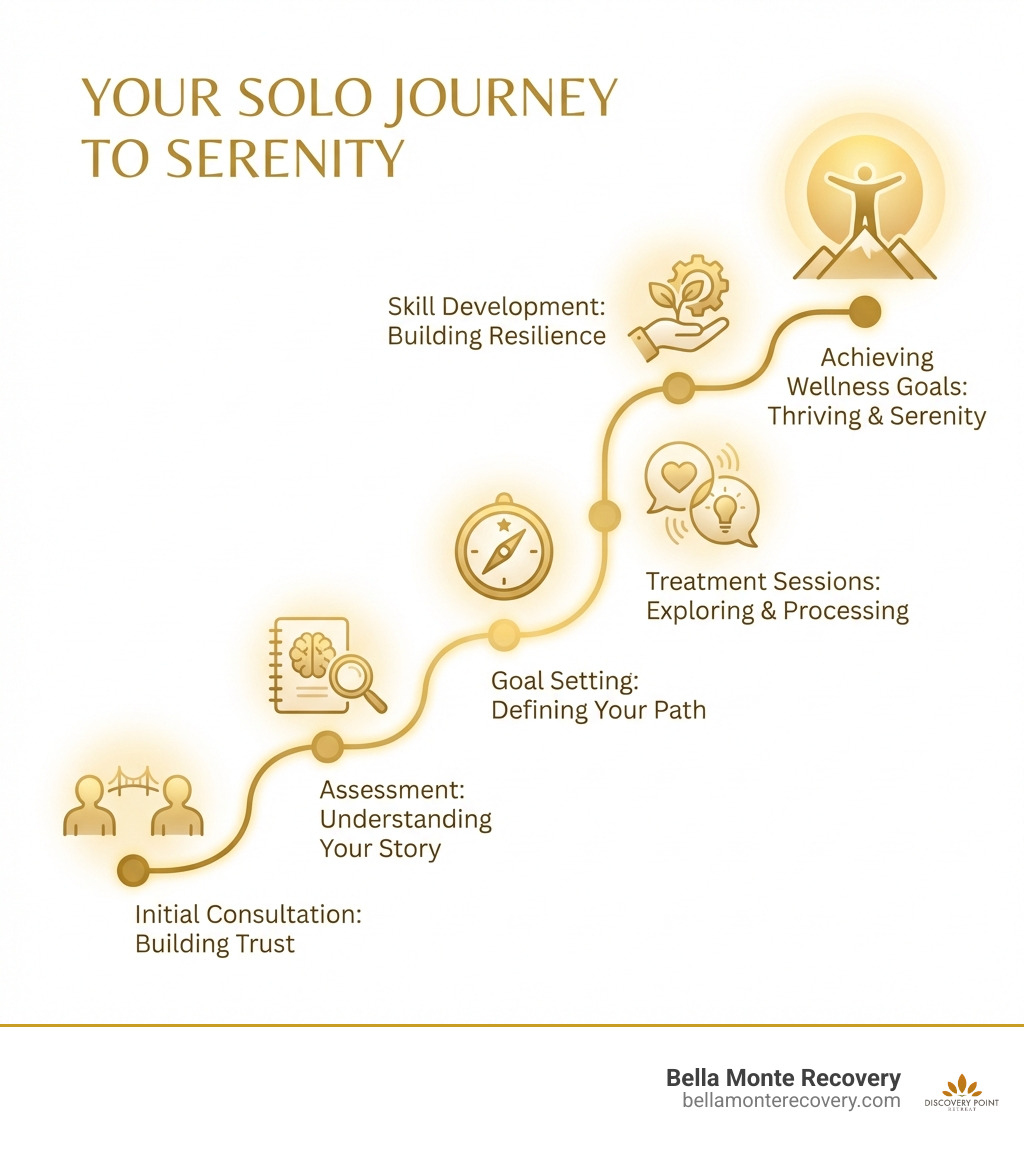
Sessions typically last 45-60 minutes, often weekly. You'll work with your therapist to set goals, explore underlying issues, and develop coping strategies. The therapeutic relationship, built on trust, is key to a successful outcome.
With 1 in 5 adults experiencing mental health issues, individual therapy is a proven, effective cornerstone of psychological well-being. It's not just for treating conditions like depression and anxiety but also for fostering personal growth and long-term wellness.
Whether you're dealing with addiction, trauma, or feeling overwhelmed, individual therapy provides the personalized support needed to reclaim your life. It’s about understanding yourself more deeply and building tools for a brighter future. In this context, individual therapy techniques for addiction can include cognitive-behavioral approaches, motivational interviewing, and mindfulness practices tailored to your specific needs. By exploring these techniques, you can uncover underlying issues and gain strategies to manage cravings. Personalized therapy not only fosters resilience but also empowers you to make lasting changes in your life.
I'm Michael Banis, and in my career leading behavioral health operations, I've seen how transformative individual therapy can be. My focus is on creating treatment environments where personalized, evidence-based care produces lasting change.
What Is Individual Therapy and How Does It Work?
Individual therapy sessions, also known as psychotherapy or talk therapy, are a one-on-one process between you and a trained mental health professional. Unlike casual conversations, this is a structured, confidential relationship designed to facilitate change. It's a collaborative process where your therapist tailors their methods to your unique background and challenges, helping you explore concerns, process experiences, and develop tools to live a healthier life.
How Does Individual Therapy Differ from Other Forms of Therapy?
The key distinction of individual therapy sessions is the singular focus on you. The therapist's undivided attention allows for a deep dive into personal issues without distraction. This contrasts with:
- Group Therapy: While valuable for shared experience, the therapist's attention is distributed among multiple participants.
- Couples or Family Therapy: These focus on the relationships and dynamics between people, not just one person's internal world.
This intensive, private environment can accelerate personal insights and lead to more profound, lasting change.
| Feature | Individual Therapy | Group Therapy |
|---|---|---|
| Focus | Solely on one individual's needs, goals, and experiences | Group dynamics, shared experiences, peer support |
| Privacy | Maximum privacy; confidential discussions between client and therapist | Shared confidentiality among group members; less private than individual sessions |
| Pace | Custom to individual's pace; can be faster or slower depending on needs | Pace set by group dynamic; may not always align with individual's immediate needs |
| Therapist Attention | Undivided attention from the therapist | Therapist's attention is distributed among group members |
| Depth of Exploration | Allows for deep, in-depth exploration of personal history and complex issues | Focus on interpersonal learning and current issues, less on deep individual past |
| Flexibility | Highly flexible in scheduling and treatment approach | Less flexible, as it involves coordinating multiple individuals |
| Primary Benefit | Personalized treatment, self-awareness, skill development, emotional regulation | Peer support, reduced isolation, social skills, diverse perspectives |
Who Provides Individual Therapy?
Individual therapy sessions are conducted by licensed mental health professionals with master's or doctoral degrees and extensive training. Common providers include:
- Psychologists (Ph.D. or Psy.D.)
- Licensed Professional Counselors (LPC)
- Licensed Clinical Social Workers (LCSW)
- Licensed Marriage and Family Therapists (LMFT)
- Psychiatrists (M.D.), who can also prescribe medication.
You can find more information on providers' credentials from organizations like the National Alliance on Mental Illness. At Bella Monte Recovery, our team consists of experts in these fields.
Who Can Benefit and for What Issues?
You don't need to be in a crisis to benefit from individual therapy sessions. It's a powerful tool for anyone seeking to improve their life. It helps with a wide range of concerns, including:
- Mental Health Conditions: Such as Depression, Anxiety, Bipolar disorder, and PTSD.
- Substance Use Disorders: Individual therapy is a key part of The Power of Therapy in Rehabilitation: Building a Strong Foundation for Recovery, helping to explore root causes and develop coping skills.
- Dual Diagnosis: It's crucial for Navigating Dual Diagnosis by addressing co-occurring mental health and substance use disorders simultaneously.
- Trauma: Provides a safe space to heal from Trauma.
- Life Transitions and Stress: Offers strategies for managing major life changes, grief, and chronic stress.
- Personal Growth: Fosters deeper self-awareness and a more fulfilling life.
If you're in Southern California and feeling overwhelmed or simply want to understand yourself better, individual therapy offers a path to improved well-being.
The Core Benefits of One-on-One Support
Individual therapy sessions offer benefits that extend far beyond symptom reduction, providing a foundation for lasting personal growth and resilience. The primary advantage is personalized attention, where a therapist tailors their approach to your unique background and challenges.

A Safe and Judgment-Free Environment
Individual therapy provides a confidential, non-judgmental sanctuary where you can openly explore your deepest fears and rawest emotions. This safety is essential for building trust and exploring sensitive topics. This trust forms the "therapeutic alliance"—the collaborative bond between you and your therapist. Research confirms that the therapeutic process is most effective when this alliance is strong, making you feel safe, heard, and understood.
Developing Skills for Lifelong Well-Being
Therapy equips you with a toolkit of practical skills for life's complexities. You'll learn:
- Problem-Solving Skills: To identify root causes and develop effective strategies.
- Stress Reduction Techniques: Including mindfulness and cognitive tools like those used in Mindfulness-Based Stress Reduction.
- Emotional Regulation: To manage intense emotions without feeling overwhelmed.
- Improved Communication: To express yourself clearly and build healthier relationships.
The skills gained in therapy have an enduring impact, with many people reporting improved conditions long after treatment ends. This makes individual therapy a transformative experience for personal growth and a more balanced life.
What to Expect During Your Individual Therapy Sessions
Knowing what to expect from individual therapy sessions can ease any apprehension about starting. The process is designed to make you feel comfortable and prepared.
The Therapy Process
- Initial Session: Your first meeting is an intake where your therapist learns about your history, current concerns, and goals. It's a chance for you to see if their style is a good fit.
- Subsequent Sessions: These sessions focus on deeper exploration of issues, learning coping skills, and identifying behaviors you want to change. Your therapist creates space for self-reflection, encouraging you to do most of the talking.
- The Therapeutic Alliance: As mentioned, the collaborative relationship between you and your therapist is vital. Studies show this alliance is a very important part of what makes psychotherapy work. Feeling safe and understood is key to successful outcomes.
Logistics and Confidentiality
Individual therapy sessions typically last 45-60 minutes, often weekly. The total duration varies based on your needs and goals. You may receive "homework" to practice skills between sessions, which, as noted in "What to Expect From Therapy", helps integrate your learning.
Confidentiality is a cornerstone of therapy. Your privacy is protected by strict ethical codes, with a few legally mandated exceptions (like risk of harm or court orders) that your therapist will explain in your first session.
Common Therapeutic Approaches
Therapists use a wide array of evidence-based practices in individual therapy sessions, creating custom treatment plans. The American Psychological Association (APA) identifies five main categories of psychotherapy. At Bella Monte Recovery, we often integrate different approaches for holistic treatment.
Cognitive Behavioral Therapy (CBT)
Often called the "gold standard," Cognitive Behavioral Therapy (CBT) is a popular approach based on the connection between thoughts, feelings, and behaviors. It helps you identify and challenge negative thought patterns to develop healthier behaviors. Research shows CBT is highly effective for depression, anxiety, and substance use, with an enduring effect that reduces the risk of relapse.
Other Effective Modalities
Many other powerful approaches are used in individual therapy sessions:
- Dialectical Behavior Therapy (DBT): Teaches skills in mindfulness, distress tolerance, emotion regulation, and interpersonal effectiveness.
- EMDR Therapy: Highly effective for processing traumatic memories and reducing their emotional impact.
- Psychodynamic Therapy: Explores how unconscious patterns and past experiences influence current behavior.
- Acceptance and Commitment Therapy (ACT): Focuses on accepting difficult feelings while committing to value-driven actions.
- Experiential Therapy: Uses hands-on methods like role-playing or creative expression to process emotions.
- Psychodrama: Uses guided drama to explore past experiences and gain new perspectives.
- Solution-Focused Therapy: A brief, goal-oriented approach that builds on your strengths to achieve desired outcomes.
Many therapists use an integrative approach, blending elements to best serve your journey.
Finding the Right Therapist for Your Needs
Finding the right therapist for your individual therapy sessions is a crucial step. A good fit is paramount for the therapeutic alliance to flourish. Consider these factors:
- Credentials and Specialty: Are they qualified and do they specialize in your issues (e.g., addiction, trauma)?
- Therapeutic Approach: What is their primary orientation (e.g., CBT, psychodynamic)?
- Experience: Have they helped others with similar challenges, like Dual Diagnosis?
- Cultural Sensitivity: Do they respect diverse backgrounds?
- Logistics: Consider cost, insurance, location (in-person in Desert Hot Springs/Palm Springs or virtual), and availability.
Use the free initial consultation many therapists offer to assess your comfort level. Online directories like the Psychology Today therapist finder can help you start your search.
The Effectiveness of Individual Therapy Sessions for Specific Conditions
Individual therapy sessions are highly effective for many conditions:
- Depression: Approaches like CBT help identify negative thought patterns and develop coping strategies, leading to fewer relapses than medication alone.
- Anxiety: Therapy teaches techniques to manage anxious thoughts and confront fears. Studies on treatment for depression and anxiety show its enduring effect reduces the risk of symptoms returning.
- PTSD: Specialized trauma-focused therapies like EMDR help process traumatic memories and reduce their intrusive impact.
- Substance Use Disorders: Individual therapy addresses the psychological drivers of addiction and is essential for integrated Dual Diagnosis treatment.
Frequently Asked Questions about Individual Therapy
Here are answers to common questions about individual therapy sessions.
How long do individual therapy sessions typically last?
A single session is typically 45-60 minutes. The overall duration of therapy varies greatly, from a few weeks for short-term issues to a year or more for chronic conditions or deep personal growth. The timeline depends on your progress, the severity of the issues, and your personal goals.
What are the potential disadvantages or limitations?
While highly beneficial, it's good to be aware of potential challenges:
- Cost and Time: Therapy is an investment of both money and time.
- Finding the Right Fit: It can take effort to find a therapist you connect with.
- Emotional Discomfort: The process can bring up difficult feelings.
- Not a Quick Fix: Change requires patience and active participation.
- Stigma: Some people still face stigma around seeking mental health support.
These are aspects to be aware of, not reasons to avoid therapy.
Is therapy more effective than medication?
It depends on the person and condition. Often, a combined approach of medication and individual therapy sessions is most effective. However, research shows therapy has an enduring effect that reduces relapse risk, even after treatment ends. Unlike medication alone, therapy teaches long-term coping skills that address underlying patterns. For many conditions, therapy is often more effective than psychotropic medication alone. The best path should be decided in consultation with a mental health professional.
Your Path to Healing and Growth
Starting individual therapy sessions is a courageous step toward taking control of your mental health. It is a guided journey with a skilled professional dedicated to your well-being. Therapy offers a safe space to develop essential life skills and find lasting relief from conditions like depression, anxiety, trauma, and addiction. It empowers you with self-knowledge, resilience, and coping strategies for a more balanced and fulfilling life.
At Bella Monte Recovery, serving Desert Hot Springs, Palm Springs, and beyond, we believe in the transformative power of personalized, evidence-based care. Our commitment, The Bella Monte Difference, is to provide the support you need to reclaim your life and build a foundation for lasting well-being.
If you're ready to take the first step, we're here to walk alongside you. Explore our comprehensive programs to begin your recovery journey in Southern California.